
Combined ShapeCreated with Sketch.

Insights

Insights From The Work

This is where we document what actually breaks inside growing marketing systems and how those failures get corrected. Every post starts from real diagnostics, not opinions, trends, or tactics in isolation.

Person typing on laptop at clean desk with notebook and pen nearby for content planning. Image by picjumbo.com (https://www.pexels.com/@picjumbo-com-55570)

The Fastest Way to Disappear Is Being Vague

Vague content gets skipped by AI search tools and LLMs alike. LLM optimization isn’t a technical project. It’s about specificity, naming your audience, and stating what you’ve actually seen work. Businesses earning AI citations aren’t running special playbooks. They write clearly about what they know, with enough detail that humans and machines both find it worth referencing.


Read More »
Clean workspace desk with laptop on wooden stand and open notebook ready for marketing analytics planning. Image by Ken Tomita (https://www.pexels.com/@ken-tomita-127057)

How To Build Marketing Analytics That Change Decisions

Most growing businesses track content performance the wrong way. They measure everything and learn nothing. This post shows how to build marketing analytics around a small set of metrics tied to real decisions. Better marketing measurement starts with better questions, not better tools or bigger dashboards.

Read More »
Laptop displaying a marketing analytics dashboard with traffic data, user geography, and device reports. Image by Lukas Blazek (https://www.pexels.com/@goumbik)

Data Hygiene Is Marketing, Even If It Sounds Boring

Your email platform says 10,000 subscribers. Your CRM says 8,500. Your payment processor shows 6,200. Which number is right? Probably none of them. Duplicate contacts, broken tags, and messy naming conventions quietly wreck your marketing management. Data hygiene isn’t IT work. It’s marketing infrastructure.

Read More »
Person holding smartphone using ChatGPT AI search interface, demonstrating how conversational queries have changed content strategy for growing businesses. Image by Bertelli Fotografia (https://www.pexels.com/@bertellifotografia)

People Ask AI Questions Like They Are Talking to Staff

Most websites are optimized for fragmented keyword searches from five years ago. That is not how people talk to AI. They ask complete questions with context, constraints, and real concerns. Your AI search strategy needs pages that answer conversational queries, not keyword-stuffed placeholders. The companies winning now write content that sounds like a knowledgeable colleague answering a real question.

Read More »
Marketing team in strategy planning session with woman presenting at whiteboard covered in sticky notes while colleagues listen. Image by A Darmel (https://www.pexels.com/@a-darmel)

Content Planning That Stops the Random Post Spiral

Most businesses post constantly without building anything. Monday’s product feature has nothing to do with Tuesday’s quote or Wednesday’s blog link. This is the random post spiral. Content planning around themes and intent connects each piece so momentum compounds instead of resets every day.

Read More »
Business owner reviewing marketing analytics dashboard with bar charts and data visualizations on laptop screen. Image by Goumbik (https://www.pexels.com/@goumbik)

Tracking First, Changes Second, That’s The Order

You change your site, your funnel, your integrations without recording what existed before. Then you wonder why your marketing analytics can’t answer basic questions. The data isn’t broken. The sequence is. Tracking comes first. Changes come second. That’s the only order that works.

Read More »
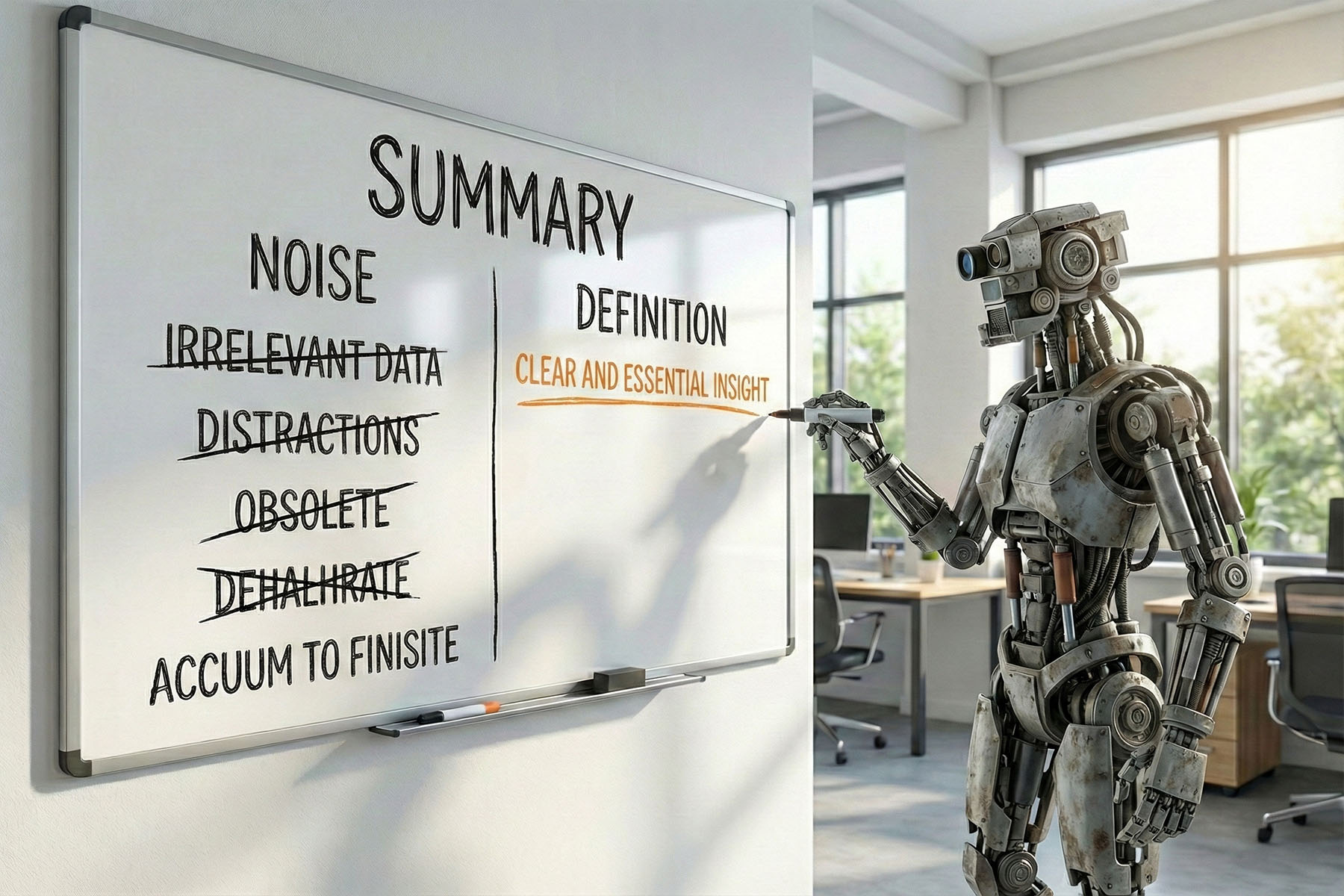
Robot pointing at whiteboard comparing noise and clear definitions, illustrating how AI overviews optimization rewards brands with consistent messaging over scattered content.

How AI Overviews Reward Brands With Clean Definitions

AI overviews optimization is not about gaming an algorithm. It is about giving Google exactly what it needs to summarize your brand correctly. When your website describes your service five different ways across five pages, AI systems skip you entirely. Brands winning citations share one trait: clean, consistent definitions repeated everywhere.

Read More »
Two professionals reviewing printed marketing analytics reports with pie charts and performance data during a strategy meeting. Image by Karola G (https://www.pexels.com/@karola-g)

Content Strategy That Survives Busy Weeks

Most content strategy dies the moment work gets busy. Plans built on motivation and open calendars fall apart when a product launch or client emergency hits. This post shows how to design your content planning around capacity, decisions, and reuse so your system keeps moving even when everything else is on fire.

Read More »
Business owner reviewing marketing analytics dashboard with bar charts and pie graphs on laptop screen. Image by RDNE Stock project (https://www.pexels.com/@rdne)

Stop Reading Vanity Metrics Like They Mean Something

Most business owners track pageviews and follower counts because those numbers go up. But going up doesn’t mean working. Marketing analytics should answer one question: what should I do next? If a number can’t help you make a decision, it’s vanity. Learn which metrics actually drive smarter choices.

Read More »
Analyst reviews charts and code for content strategy and brand positioning on dual screens. Image by Olia Danilevich (https://www.pexels.com/@olia-danilevich)

Stop Publishing Pages That Compete With Each Other

Most sites do not have a content problem. They have a map problem. When pages overlap, humans hesitate and search systems get mixed signals. A clear Content Strategy ties topics to intent, supports Brand Positioning, and keeps Marketing Strategy from turning into internal competition. It is a fix you can control.

Read More »
Accordion file organizer holds papers beside desk, supporting marketing strategy plan and content strategy review. Image by Anete Lusina (https://www.pexels.com/@anete-lusina)

Systematize Marketing Workflow Before You Add Tools

Most teams do not need more apps. They need a simple operating rhythm. This guide shows how to systematize marketing workflow with clear content planning, production, publishing, and review steps so your content strategy stays consistent when the week gets chaotic.

Read More »
Hands review tablet dashboard and notes for marketing analytics and content strategy, image by George Morina https://www.pexels.com/@georgemorina

Marketing Analytics You Can Use Every Monday With Confidence

Most teams stare at dashboards and still guess. This post shows how Marketing Analytics should drive decisions across your website, campaigns, and tools so you know what to keep, what to cut, and what to fix. It ties tracking to Marketing Management instead of reporting, and flags the gaps that waste budget.

Read More »